Chop’t is Tops in Crain’s
By admin | | Category: Featured Stores | Comments Off on Chop’t is Tops in Crain’sSalad days: Chop’t finds green
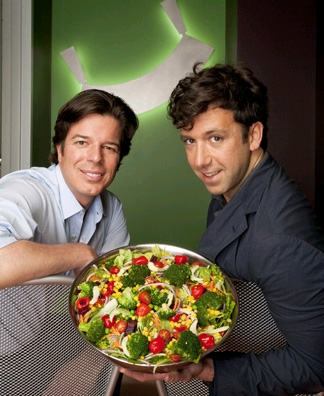 The day Colin McCabe and Tony Shure, both 37, opened their first Chop’t Creative Salad Co. location in January 2001, the cash registers broke. “Colin was at station one and I was at station two when the point-of-sale system went down,” said Mr. Shure. “We couldn’t charge anybody, so we looked at each other and said, ‘Free.’ We already had a line to the door. After that, people went back to their offices and told their co-workers about the new free salad place on East 17th Street. Then we had a line down the block.”
Eleven years later, “free day” is a Chop’t tradition. On the first day of each new store opening, the salad is on the house for three hours. It’s a way to generate buzz—in the form of extremely long lines—while training the staff in handling a lunchtime rush.
But even when the co-founders aren’t giving the product away, Chop’t has customers queuing up for its “hand-chopped” gourmet salads. Over the past decade, the chain has grown into a profitable business, with $33 million in annual sales from 16 stores in New York City and Washington, D.C. Plans are in the works for more than a dozen new stores in the next two years.
Mr. Shure and Mr. McCabe dreamed up Chop’t in the mid-1990s, when the two New Yorkers were students at the University of Wisconsin and frustrated by their culinary options in a land of burger and fried-chicken joints. “We would go to the all-you-can-eat buffet at Pizza Hut just to get salad,” said Mr. Shure.
Meanwhile, they were watching a burgeoning segment of the restaurant market: Fast-casual chains like Chipotle Mexican Grill and Così sandwich shops were offering table-service quality at a fast-food pace. The Atkins and South Beach diets were generating interest in vegetables and lean proteins. Mr. Shure and Mr. McCabe started their business plan at a Kinko’s while drinking coffee from Starbucks. “All of that got our wheels churning,” Mr. Shure said, “and we came up with Chop’t from that.”
After graduating, the pair earned their true chops at a restaurant in Denver before returning to Manhattan with a business plan. With the help of friends and family, they raised $750,000 to open the first Chop’t restaurant in Union Square.
Their first challenge: Persuade the lunch crowd to crave nothing but a salad. So they developed “recruiting” salads, such as a steak offering with with onion rings, and a panko-fried-chicken salad. They also gave the store a theatrical element: Customers watch as workers chop their greens with mezzaluna knives. And they continually added ultra-trendy ingredient options, like cotija cheese, edamame and quinoa.
Most important, the founders correctly understood consumers’ increasing willingness to pay for fresh, tasty food delivered quickly. Normally, entrée-size salads like the Mexican Caesar or the Kebab Cobb cost about $8 to $10—but restaurant analyst Bonnie Riggs said today’s diners will pay extra if the quality is there. “It’s not about the cheapest price,” said Ms. Riggs of market-research firm NDP Group in Port Washington, L.I.
Increased customer sophistication has also enabled Chop’t chefs to take inspiration from everything from Saveur magazine to Anthony Bourdain (whose recent trip to Sardinia on the television show No Reservations sparked the idea for the restaurant’s Sardinian Caesar salad). “There is a general knowledge of food in the past decade that has exploded,” said Mr. McCabe.
Now they’re spreading the message of better eating to New York City public schools. As part of the Wellness in the Schools program, Chop’t has adopted P.S. 175 in Harlem, and in June will take its fifth-grade class on a tour of the White House garden. The hope, said Mr. Shure, is that improving kids’ diets will also help their studies. “It’s an unreasonable expectation that you’re going to feed kids bad, sugary food and expect them to sit still and learn,” said Mr. Shure.
Two guys who spent their college days in a vegetable desert ought to know.
—Sara Eckel
Click here to read the article in Crain’s